Healthcare AI and data work,scoped and priced before it starts.
Kent Applied helps healthcare organizations put AI, data science, analytics and data visualization to work, with a fixed price and a written definition of done on every engagement.
 Run by Tyler Kent: 13+ years in data science and analytics, most of it in healthcare, nine peer-reviewed papers including one in JAMA Network Open, and AI products he built that run in production.
Kent Applied also publishes free research, charts and sourced numbers for healthcare leaders. Browse Insights
Ways to start
- AI Leadership WorkshopHalf day. A ranked list of places AI could help, a draft AI use policy and a 90-day plan.$3,500
- AI Readiness Sprint2 weeks. A costed roadmap and one working prototype.$9,500
- TEAM position reportFor hospitals in CMS's TEAM model. It compares your Medicare surgery costs with TEAM's target prices and arrives within 2 business days.Free
Services
Services and prices
Every engagement has a fixed price and a written definition of done. Nothing is billed by the hour.
-
Start here
Start with a half-day workshop, a two-week sprint, or a free report for hospitals in CMS's TEAM model.
-
AI tools
Each tool does one job on a schedule, and a person approves what it produces. Run one alone, or connect several into one system, the way the four AI systems on the Portfolio page work together. Each tool costs a fixed price to build, then a flat monthly fee. If you run three or more tools at one site, their monthly fees are capped at $1,000 a month in total.
- Weekly Leadership Brief, 1–2 weeks, from$6,500 + $250 a month
- Website, Reviews and Social Desk, 1 week, from$4,500 + $250 a month
- Price Transparency and Accessibility Monitor, 2–3 weeks, from$9,500 + $450 a month
- Payer and Vendor Contract Register, 3–5 weeks, from$14,500 + $350–850 a month
- Funding and Needs Assessment Desk, 2 weeks, from$9,500 + $300 a month
- Health Center Site Visit Readiness, 2–4 weeks, from$11,000 + $250 a month
- Nursing Home Survey Readiness, 1 week, from$6,500 + $250 a month
- Custom AI Tool, 2–3 weeks, from$9,500 + $450 a month
-
AI adoption
AI policies, vendor checks and training for organizations whose staff already use AI.
-
Data and analytics
Data people can trust, kept in one place with one agreed definition for each measure, and the dashboards, models and studies built on it.
-
Hospital operations
Discharge delays, emergency department boarding and staffing, measured from your own hourly data.
-
Apps
Web apps for one team's daily work, on phones and desktops. Build a new tool for a job, or rebuild the spreadsheet a team has outgrown. AI goes in only where it helps.
-
Ongoing
A part-time AI and data lead for organizations not ready for a full-time hire.
Not on the list? Bring it to a call. If AI or data science can solve it, you'll get a fixed price and a written definition of done within 48 hours.
Portfolio
Four AI systems Tyler Kent built
Tyler designed and built them for a public data platform on healthcare and aging in America. Kent Applied builds systems like these for clients, on their own data.
Tessera
Drafts insights on emerging topics, each with an analysis plan that uses the platform's data and says where to get missing data.
sourced signals a week, from nearly 200 sources
Emblema
Turns a written finding into a branded, publication-ready infographic, so nobody waits for a designer.
design-queue wait between insight and visual
Sentinel
Audits the live platform, assigns a ticket for each problem and closes it when fixed, and suggests ways to rank higher in search.
automated checks, run every morning
Opus
Sends leadership one page a week on where things stand and what needs their decision, each figure traceable to its source.
for leadership, in an app on their phones
Built to work together
Each new tool starts from what the others already produce
Emblema starts from Tessera's findings, Sentinel checks what both of them publish, and Opus reads what all three did. Each tool leaves behind records the next one can use, so the savings grow with every build.
A connection is a pair of tools where one uses the other's work. If a fifth tool joins, it could draw on all four, which would make 10, the most possible. How many it uses depends on the tool, but each new one has more to build on than the one before.
Insights
Insights for healthcare leaders
Interactive analyses built from public data, articles by Tyler Kent, AI news picked each day, and charts and sourced numbers free to share and cite.
Research
All 5 analysesBlog
All 14 articlesUpdated Tuesday, October 20
U.S. Orders Federal Agencies to Remove DeepSeek AI from All Systems (opens in a new tab)
TechCrunch, Oct 20
How this relates to healthcare: Health systems that buy AI tools should ask vendors which underlying models they use, since federal agencies must now remove DeepSeek and tools built on it.
Hacker Used AI Agents to Break Into Over 100 Company Websites Autonomously (opens in a new tab)
The Verge, Oct 20
How this relates to healthcare: Security teams should plan for automated attacks that hit many targets at once, and review patching, monitoring and response times for public-facing sites and patient portals.
Charts
All 28 charts- From the blog
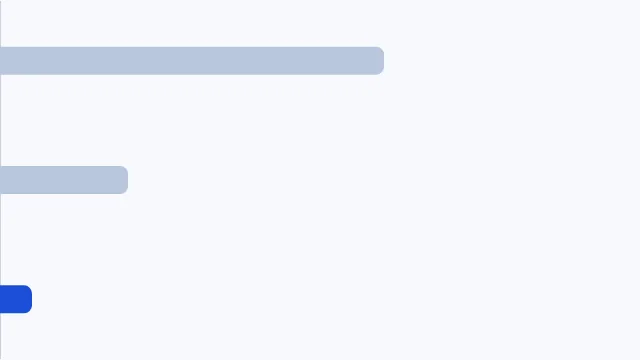
Only 5% of organizations put a custom or vendor-sold generative AI tool into production
MIT NANDA, The GenAI Divide: State of AI in Business 2025 (July 2025) - From the blog
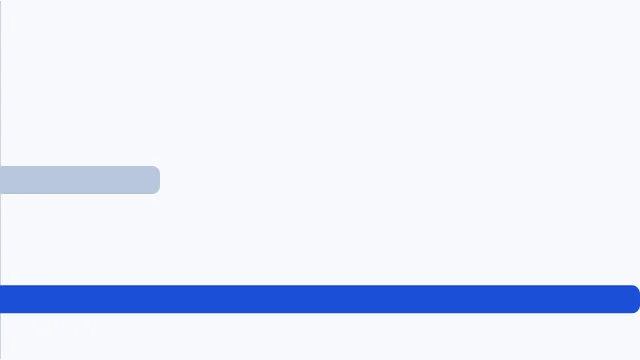
A TEAM hospital in Track 3 can owe CMS up to 20% of its total target price in a year
CMS, TEAM Model Overview slides (updated September 2026); 42 CFR 512.550, TEAM reconciliation (eCFR) - From the blog
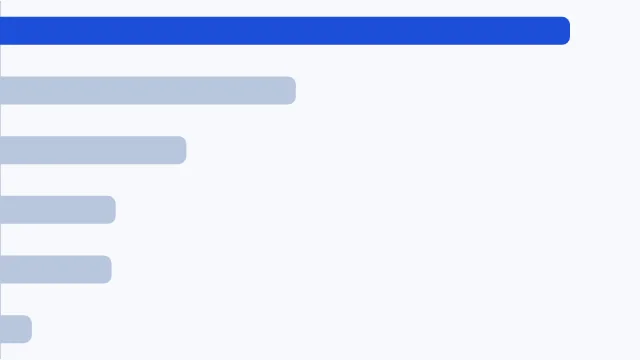
Finding a place that would take the patient caused the most discharge delay days
HANYS, The scope of complex case discharge delays in New York state (2023)
Facts
All 50 facts40
prior authorizations a week, on average, per physician
Physicians complete an average of 40 prior authorizations a week, which take 13 hours of physician and staff time, the AMA's 2025 survey of 1,000 physicians found.
Source: AMA survey: Prior authorization reform pledge falls short with physicians.
KentApplied184.2
staff hours per annual UDS report, 2026 estimate
For 2026, HRSA estimates that a health center spends an average of 184.2 staff hours on its UDS report, the yearly report of patient and service data that health centers send HRSA. That is down from 238 hours in HRSA's estimate for 2025, mostly because HRSA removed some lines from the report's tables and merged others.
Source: HRSA Uniform Data System information collection notice, Federal Register, June 16, 2026.
KentApplied46%
of nursing staff turned over in 12 months at the median skilled nursing facility
The 12-month rate of nursing staff turnover as of 2024 was 46% for the median skilled nursing facility, MedPAC reported in March 2026.
Source: March 2026 Report to the Congress, Chapter 7: Skilled nursing facility services.
KentApplied
Sources for the figures above
- MIT NANDA, The GenAI Divide: State of AI in Business 2025 (July 2025) (opens in a new tab)
- 42 CFR 512.550, Reconciliation process and determination of the reconciliation payment or repayment amount (opens in a new tab)
- HANYS, The scope of complex case discharge delays in New York state (2023) (opens in a new tab)
- AMA survey: Prior authorization reform pledge falls short with physicians (opens in a new tab)
- HRSA Uniform Data System information collection notice, Federal Register, June 16, 2026 (opens in a new tab)
- HRSA Uniform Data System information collection notice, Federal Register, June 23, 2025 (opens in a new tab)
- March 2026 Report to the Congress, Chapter 7: Skilled nursing facility services (opens in a new tab)

About
Tyler Kent
Tyler has spent more than 13 years in data science and analytics, most of it in healthcare. His Medicare claims work supported analyses behind federal drug-pricing policy. He has led the build of two companies' data platforms from zero and has managed multimillion-dollar budgets many times. He has built clinical trial datasets for FDA submissions, predictive models and AI products that run in production, under HIPAA, CMS and FDA rules.
He has taught more than 25 courses on AI adoption to leadership teams and staff and has guided multiple organizations on how to put AI to work. For years he has also guest-lectured in a graduate clinical informatics course at the University of San Diego. Tyler takes your first call himself, and there is no junior team to hand your project to.
years in data science and analytics, most of it in healthcare
peer-reviewed journal papers, including JAMA Network Open
AI products designed and shipped to production
annual client renewal at a healthcare software company, where Tyler designed and implemented a score that showed staff which clients needed attention
You know the price and the definition of done before work starts.
Nothing counts as finished until it works on real examples from your own organization.
Each statement of work says what data is used, where it stays and whether AI tools touch it.
Documentation and training are part of the work, so your team can run it.
Book a 20-minute call
Describe the problem. You'll hear what kind of work it needs and roughly what it would cost.
Prefer to skip the call? Get a written proposal
Or email tyler@kentapplied.com, or connect on LinkedIn.